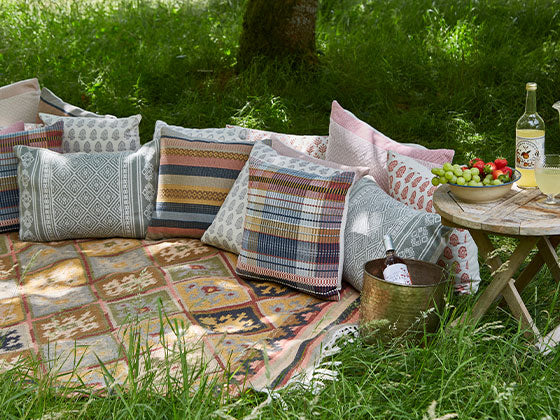
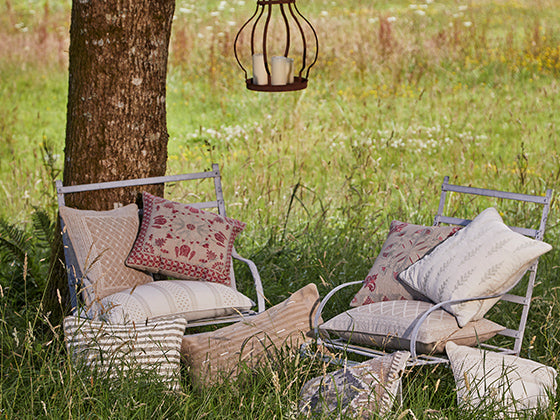
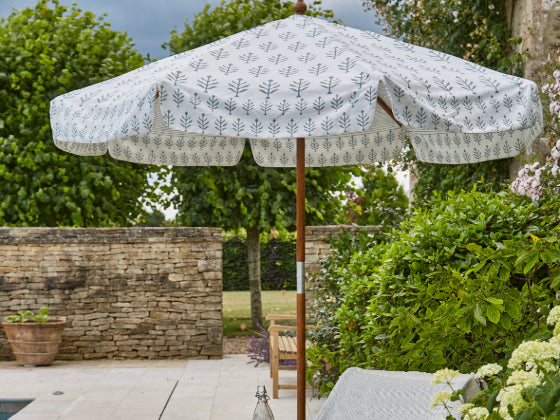
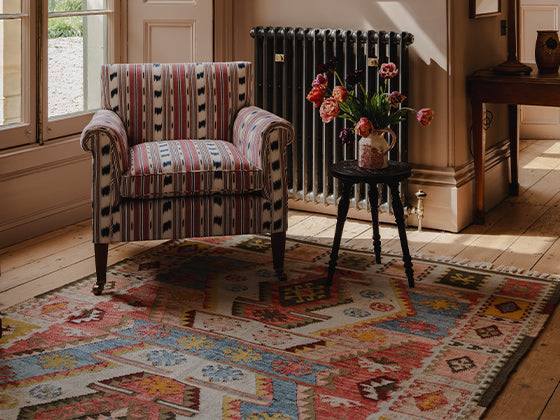
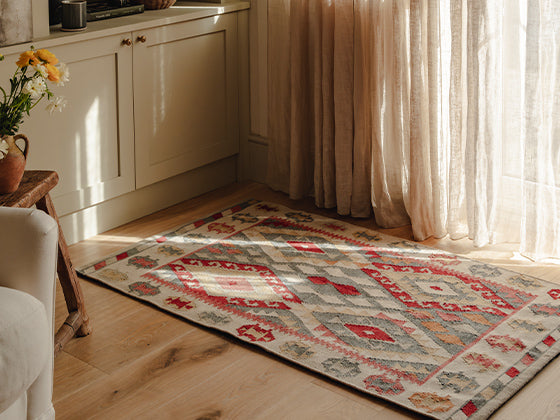
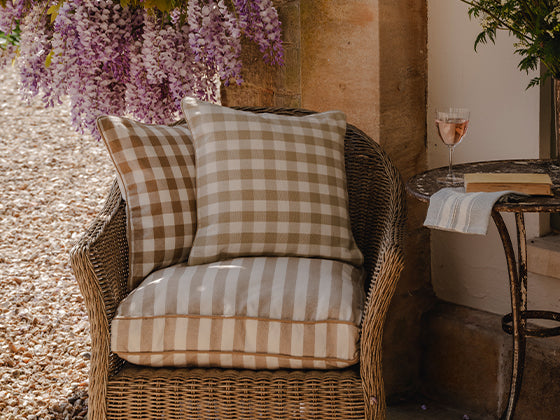
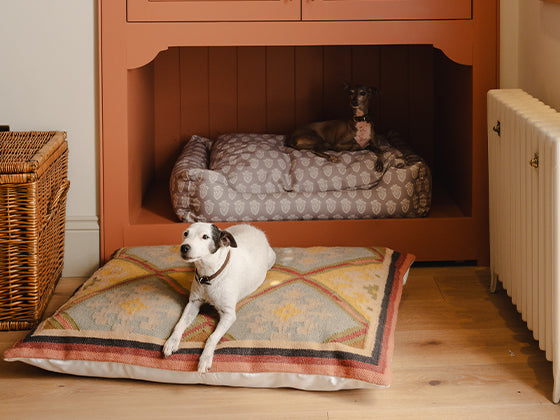
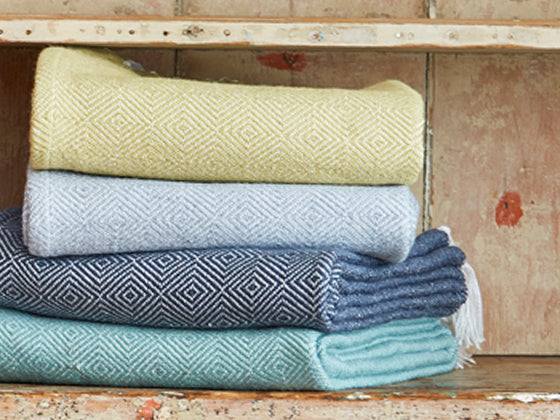
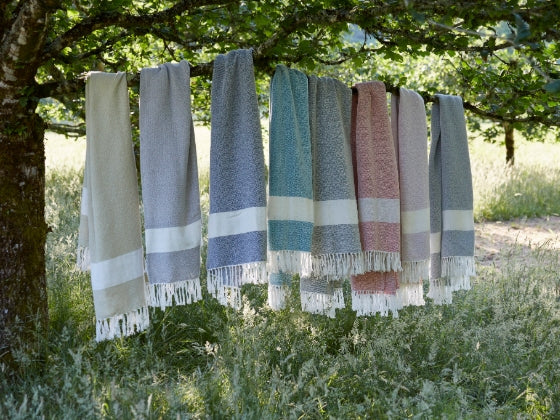
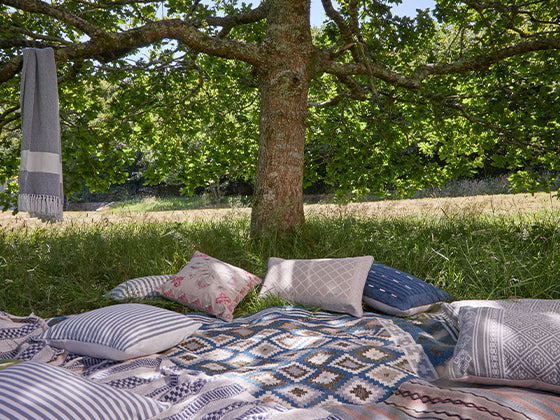
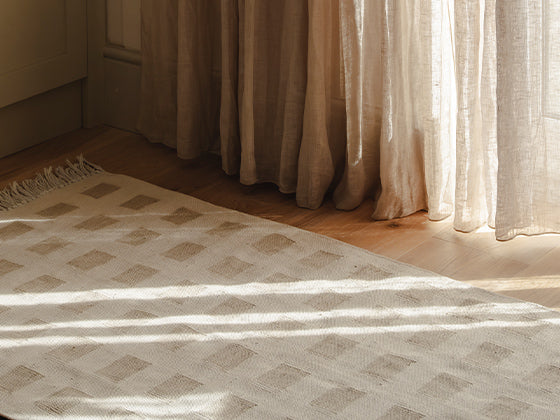
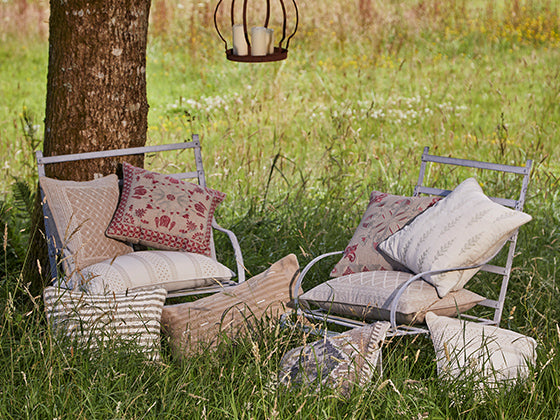
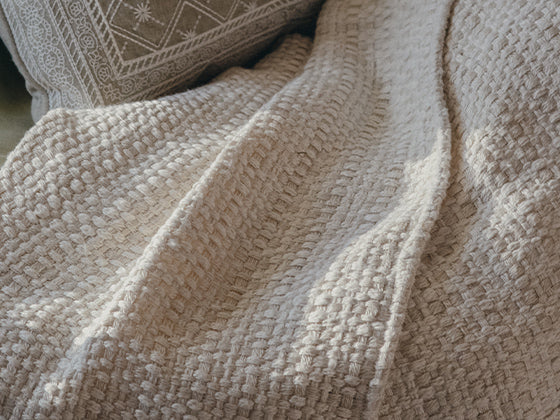



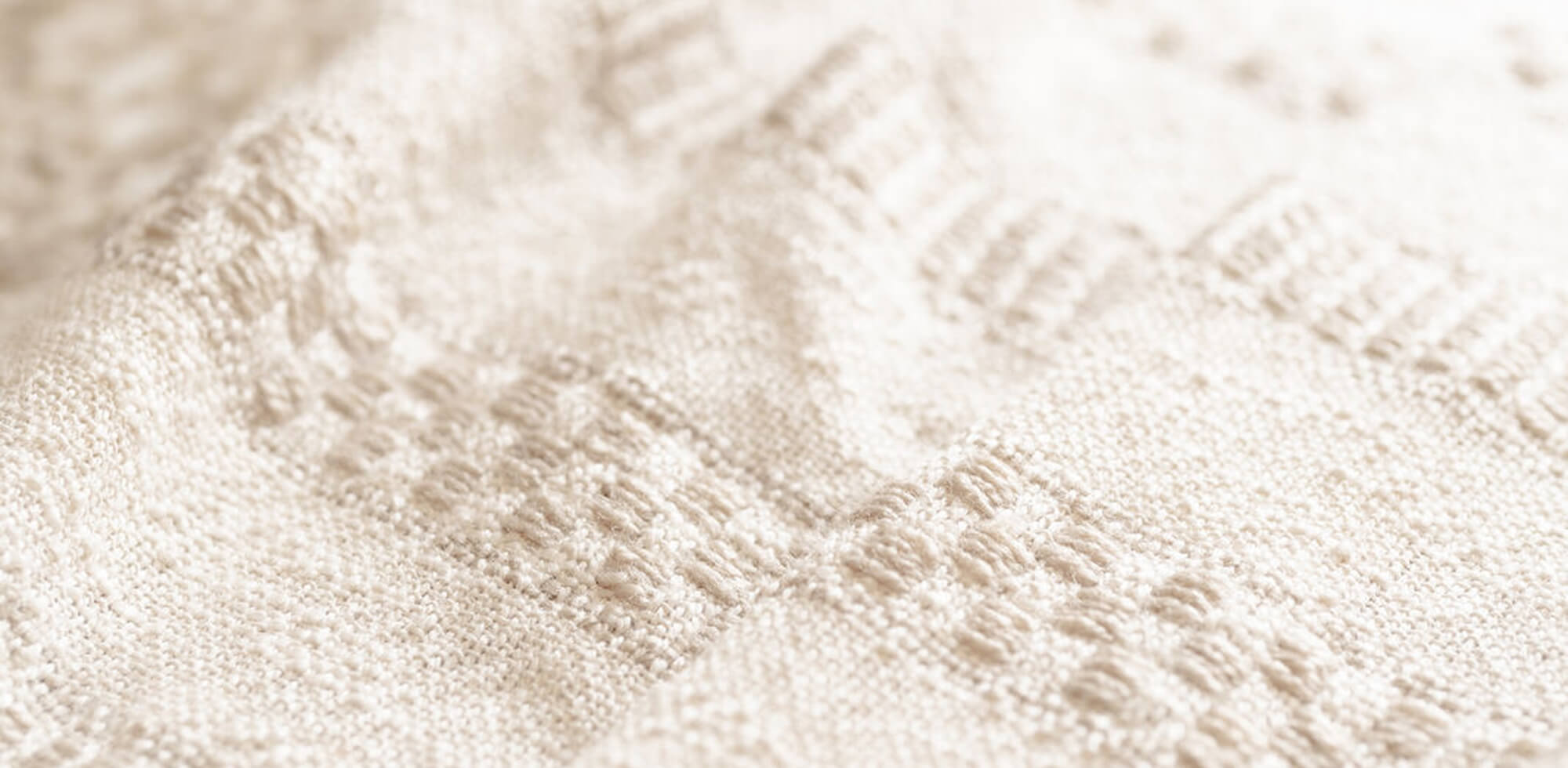
At Weaver Green, it sometimes feels like we spend half our lives trying to convince people online that our gorgeous rugs and textiles really do feel as soft as wool. Meanwhile, the other half is generally spent convincing people at trade shows and in stores that what they are touching really is made from recycled plastic bottles!
Transformation
Recycling Bottles into Soft Yarn
Step One
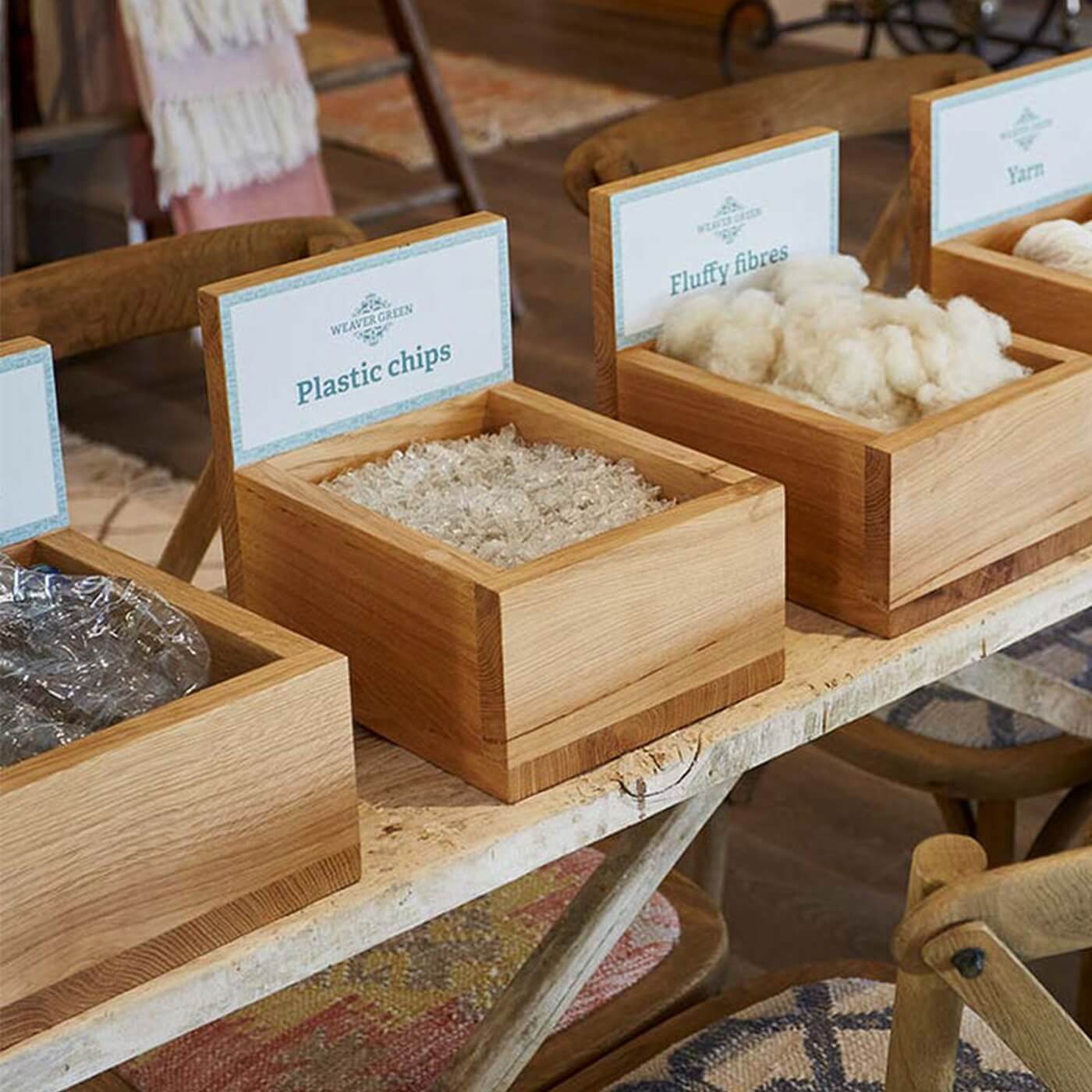
First, we take disused PET plastic bottles and shred them into very fine strips.
Step Two
Then we heat and back comb the strips until tiny fibres start to open.

Step Three
Next, we spin and stretch the fibres to create a beautiful, soft and resilient yarn.
Step Four
Using non-toxic dyes, we transform our new yarn into a rainbow of different colours.

Step Five
Once dry and ready to use, we hand-loom the recycled yarn using traditional weaving techniques.
Step Six
And create gorgeous rugs and textiles that will brighten any home, business or garden.

It Starts with Bottles
While we’d all rather it wasn’t the case, the principal component of our products is already widely available and a well reported environmental disaster.
Every day millions of plastic bottles are sold and discarded around the world, often failing to be recycled and instead sent to landfill or left to make their way towards rivers and waterways destined for the sea.
By the end of 2019 we recycled our 100 millionth plastic bottle. Almost half of them have been retrieved from streams, rivers and the coast while the rest were chucked away after the briefest of purposeful life, especially given the 450 years an average plastic bottle will take to break down.
Managing the Process
Making textiles from synthetics isn’t a new concept, but it’s estimated that making soft open yarn like ours from recycled plastic bottles uses as much as 70% less energy and almost 90% less water than creating them from scratch.
It also makes much more valuable use of the precious resources that go into making the plastic bottles in the first place, like oil and water.
Because the hard work of making the plastic is done already, our production processes can be fine tuned to limit emissions and use as few resources as possible. For example, our yarn is produced using a closed water system that constantly recycles, purifies and reuses the same water.

Creating Positive Textiles
We’re bothered about the environmental impact of our products. That’s why we use long strand yarn to improve tensile strength and reduce the risk of microfibre shedding.
Although our textiles are machine washable, realistically they should only need that kind of deep clean on rare occasions. When they are washed, we always recommend short, cold cycles with full loads and no spin dry; doing so will help minimise the shedding of microfibres.
It's our goal to minimise waste plastic in our packaging, opting whenever possible to use sustainable, recycled and recyclable paper and card alternatives.
Responsible Washing
One question we're often asked regards the potential for microfibre shedding when washing our products. We want the environmental impact of our products to be as positive as possible.
It's important to us that the plastic we retrieve doesn't end up in the sea in any form, so we're constantly working on ways to limit microfibre shedding. You can read all about what we're doing and how you can help by following the link below.
Discover more
About Weaver Green

Our Story
It all started when our founders, Tasha and Barney were traveling in Asia and stumbled across a rudimentary fishing rope, made from unraveled plastic bottles.
read more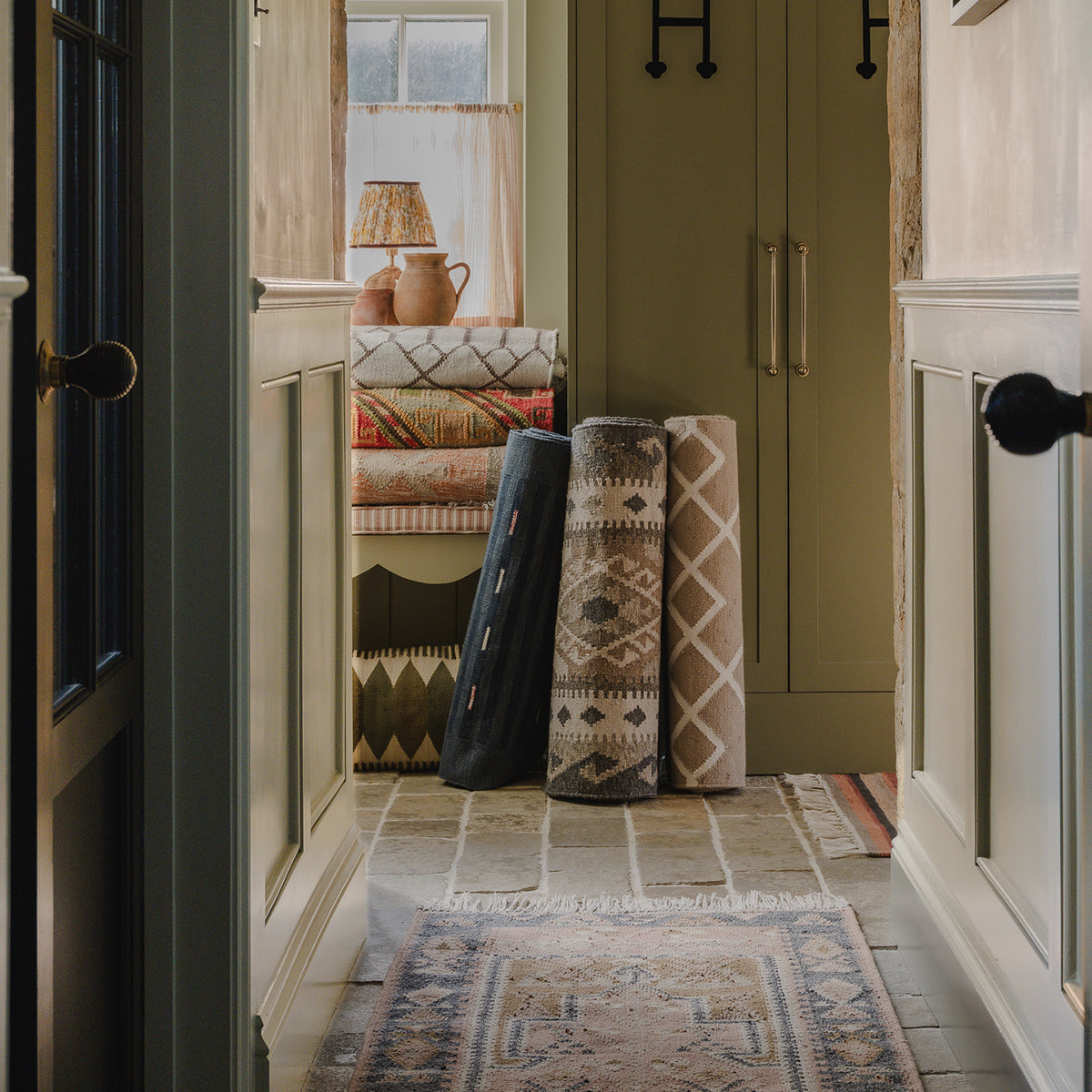
Our Products
Find out more about our products and what makes them such a brilliant blend of style, comfort and practicality for the eco-minded consumer.
read more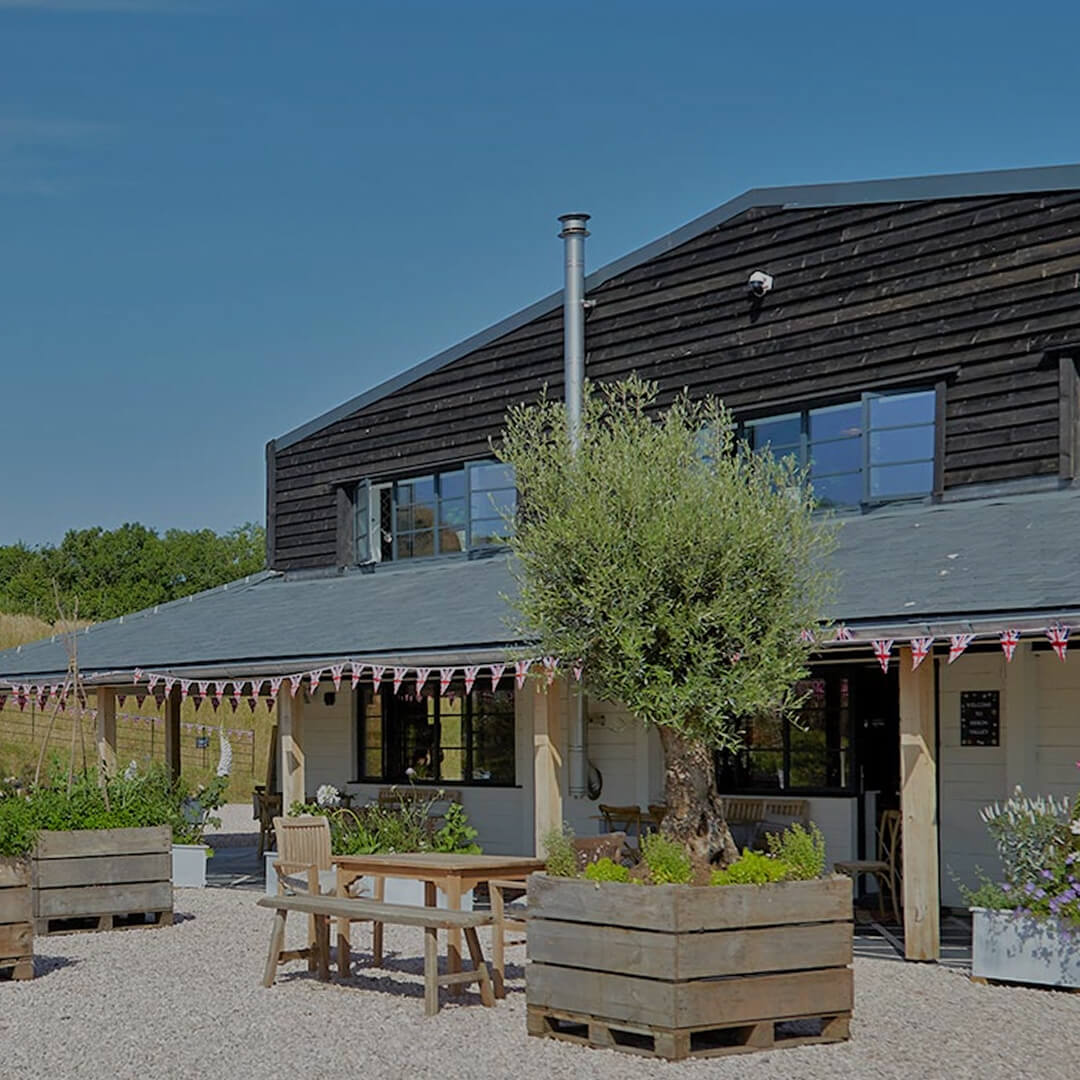
The Showroom
Set among the orchards and enjoying the most incredible views of Devon's Avon Valley, our showroom is the perfect place to get your hands on recycled textiles.
Read more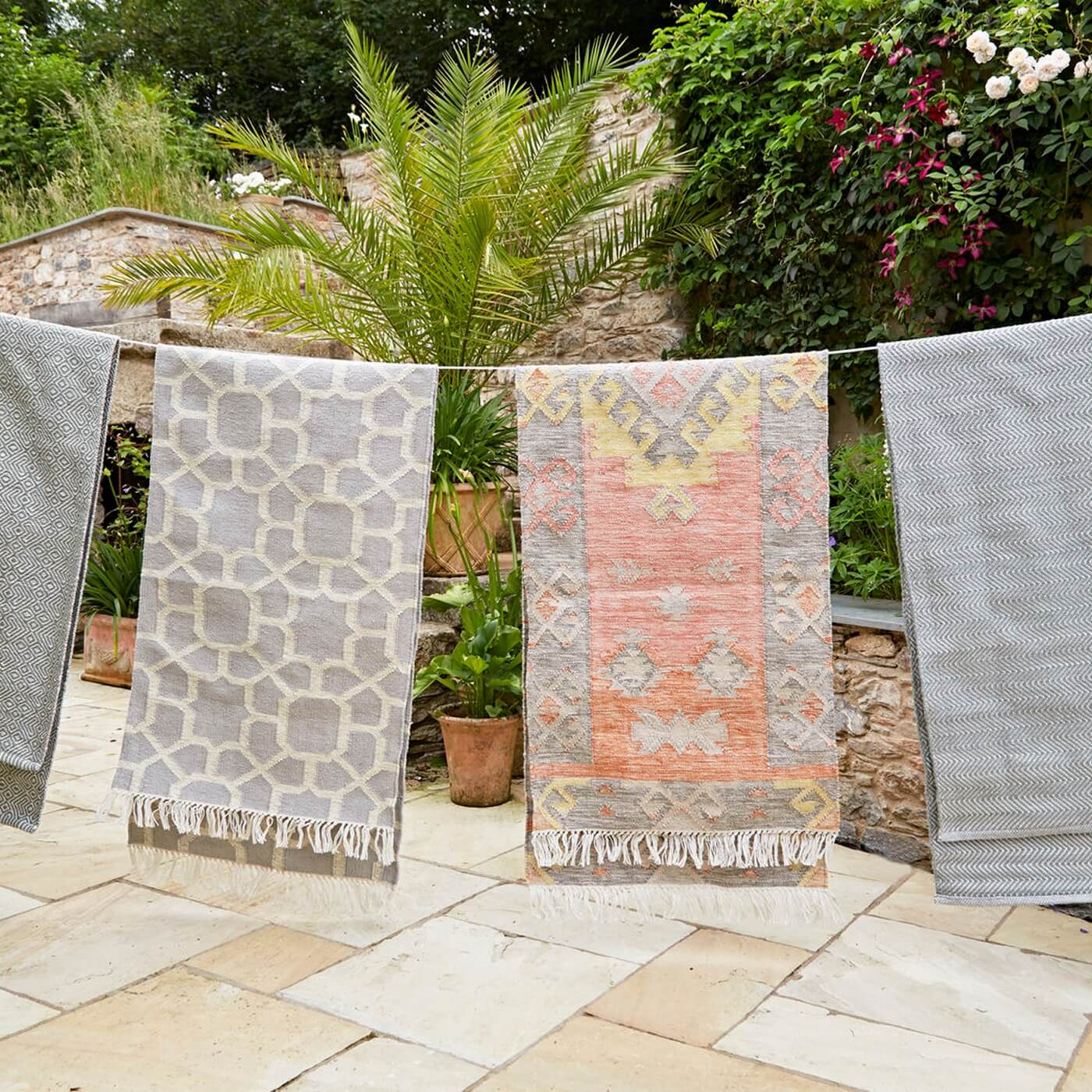
Cleaning & Care
Whether it's one of our super tough kilim rugs or a soft, intricate open-weave throw, our products are all easy to maintain and machine wash clean.
read more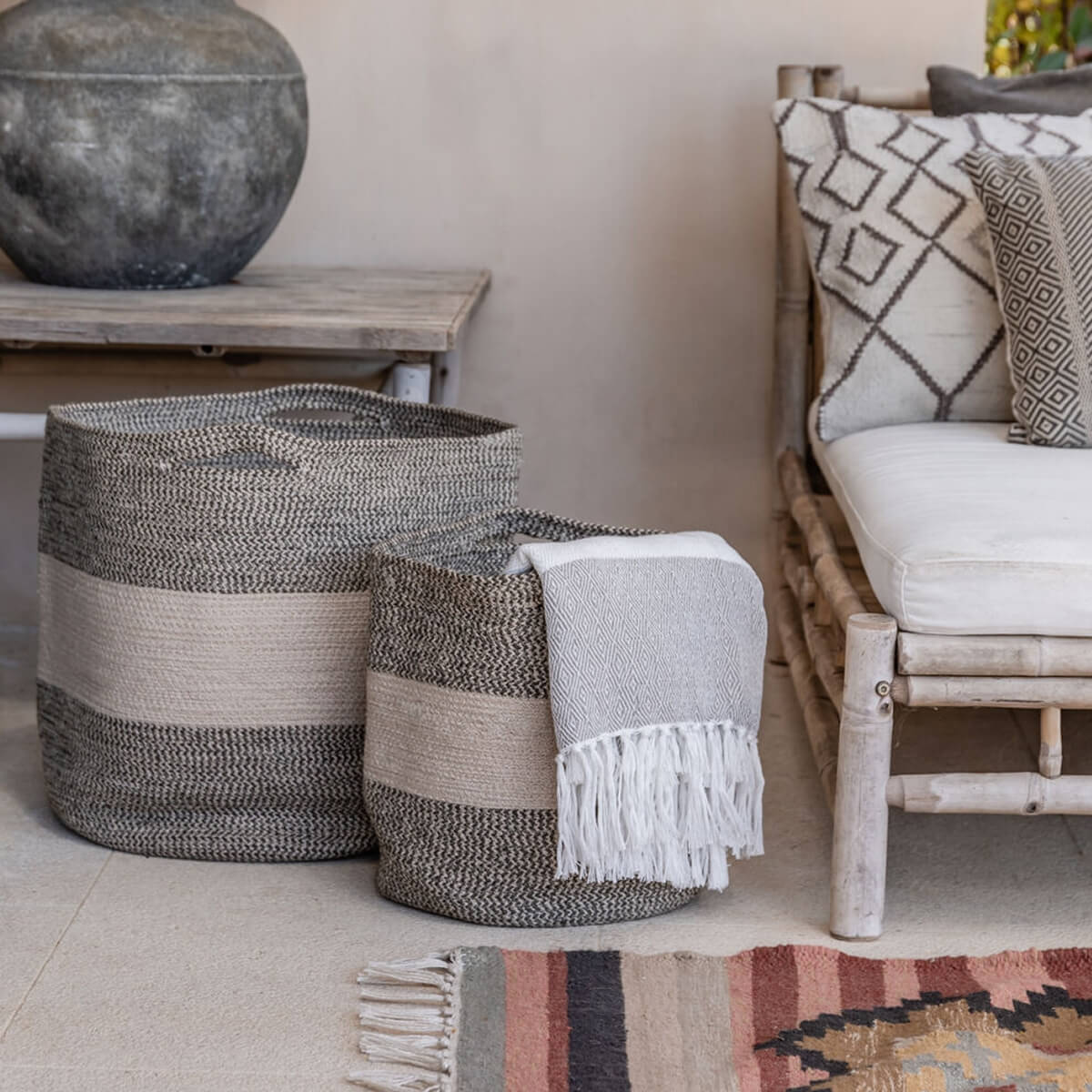
Tackling Microfibres
Read more about what we're doing to minimise microfibre shedding of our products, and how you can play your part at home.
read more